September 29, 2026
Ethiopia: strengthening care and healing for survivors of conflict-related sexual violence
Making sure that survivors of conflict-related sexual violence in Ethiopia can access quality care that meets all their needs remains a priority for the Mukwege Foundation. In August 2026, the Foundation brought its partners together in Addis Ababa to strengthen support for survivors in the Tigray region.
The participants included leaders of the survivor-led network Justice and Peace for Tigrayan Women and Girls Network (JPTWG) as well as health workers from Ayder Comprehensive Specialized Hospital in Mekelle and Suhul Hospital in Shire. Together, they took part in training on providing emotional and psychological support, and on combining medical care with the careful documentation needed to support survivors’ access to justice.
The activities focused on different kinds of support, some led by survivors within their own communities and others provided by hospitals and health workers. But they all shared the same goal: to make sure survivors receive support that keeps them safe, is well coordinated and respects what they need and want for themselves.
Promoting healing and trust in survivor- led networks through peer-to-peer support
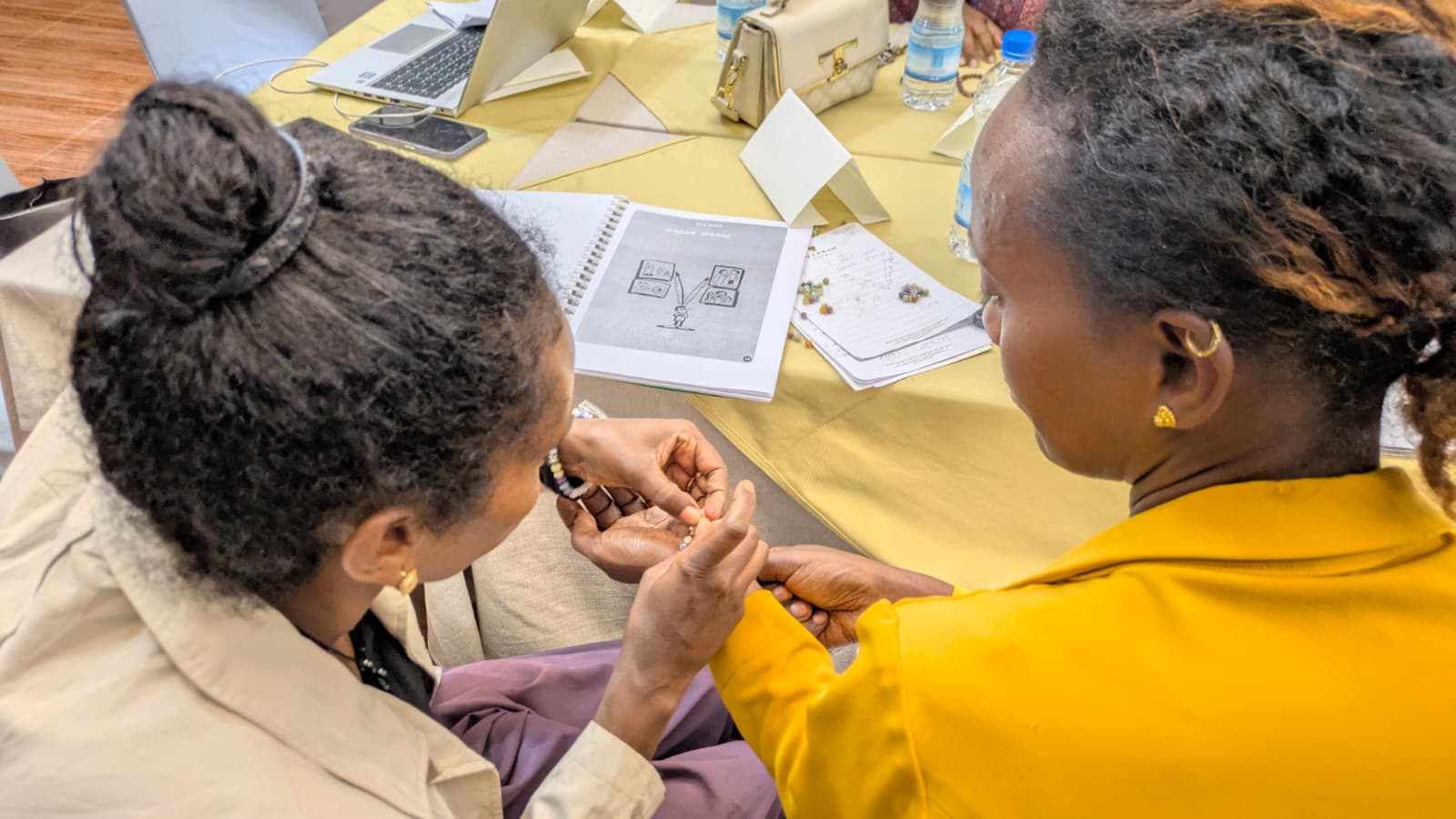
In Ethiopia, leaders of the JPTWG, accompanied by the Mukwege Foundation and Help Generation, often work as frontline responders in identifying other survivors, responding to their needs for support following sexual violence, and supporting them with dealing with their everyday concerns. In addition to their lived experiences with war and conflict-related sexual violence as traumatic events, survivors in the network who engage in peer-to-peer support must also manage the challenges that come with supporting other trauma-affected individuals. The Mukwege Foundation prioritises supporting these survivors in this important care work, which they are often already doing. As one network leader explained: “If she insults me more, even if she beats me, I still help her because I know she is going through a lot.”
During a three-day training course from 18th to 21st of August 2026, JPTWG leaders together with two mental health specialists explored the basics of trauma, its consequences, how it can affect survivors of conflict-related sexual violence, and how peer-to-peer support can promote emotional wellbeing, resilience, and pathways to care. The training emerged from a broader effort to respond to psychosocial support needs identified by the survivor network during consultations held in Mekelle in December 2025.
These consultations revealed significant challenges affecting survivors’ access to mental health and psychosocial support (MHPSS), including limited availability of services, fragmented referral pathways, stigma, and financial and transportation barriers. In response to these challenges, the Mukwege Foundation has since initiated a multi-pronged approach, supporting key structures by strengthening their psychosocial support care packages, strengthening the network’s psychosocial care capacities for peer-to-peer support and resilience, and strengthening the capacities of professionals around the network.
The training conducted in August combined basic psychosocial and emotional first-aid skills, trauma-informed approaches, and the World Health Organization’s Doing What Matters in Times of Stress (DWM) programme. Adopting a highly participatory and practice-oriented approach, participants practised five practical tools from Doing What Matters in Times of Stress: Grounding, Unhooking, Acting on Our Values, Being Kind, and Making Room (World Health Organization 2020). These tools offered practical ways to manage stress, stay connected to the present, and cope with difficult thoughts and emotions.
The training also introduced Emotional First Aid, focusing on listening without judgement, respecting choices, maintaining confidentiality, building trust, and offering support without taking control away from the survivor. The training also sparked interesting discussions among the leaders of survivor networks about how they share responsibilities within their groups, and how effective organisation and decision-making can build stronger, longer-lasting networks. The same leaders further explored these questions and discussions in a network-strengthening workshop conducted by the Mukwege Foundation. An important goal of these activities was to support survivors of CRSV to use these skills in their own communities, supporting other survivors as peers who understand their experiences first-hand.
Improving the continuity of care by improving psychosocial systems
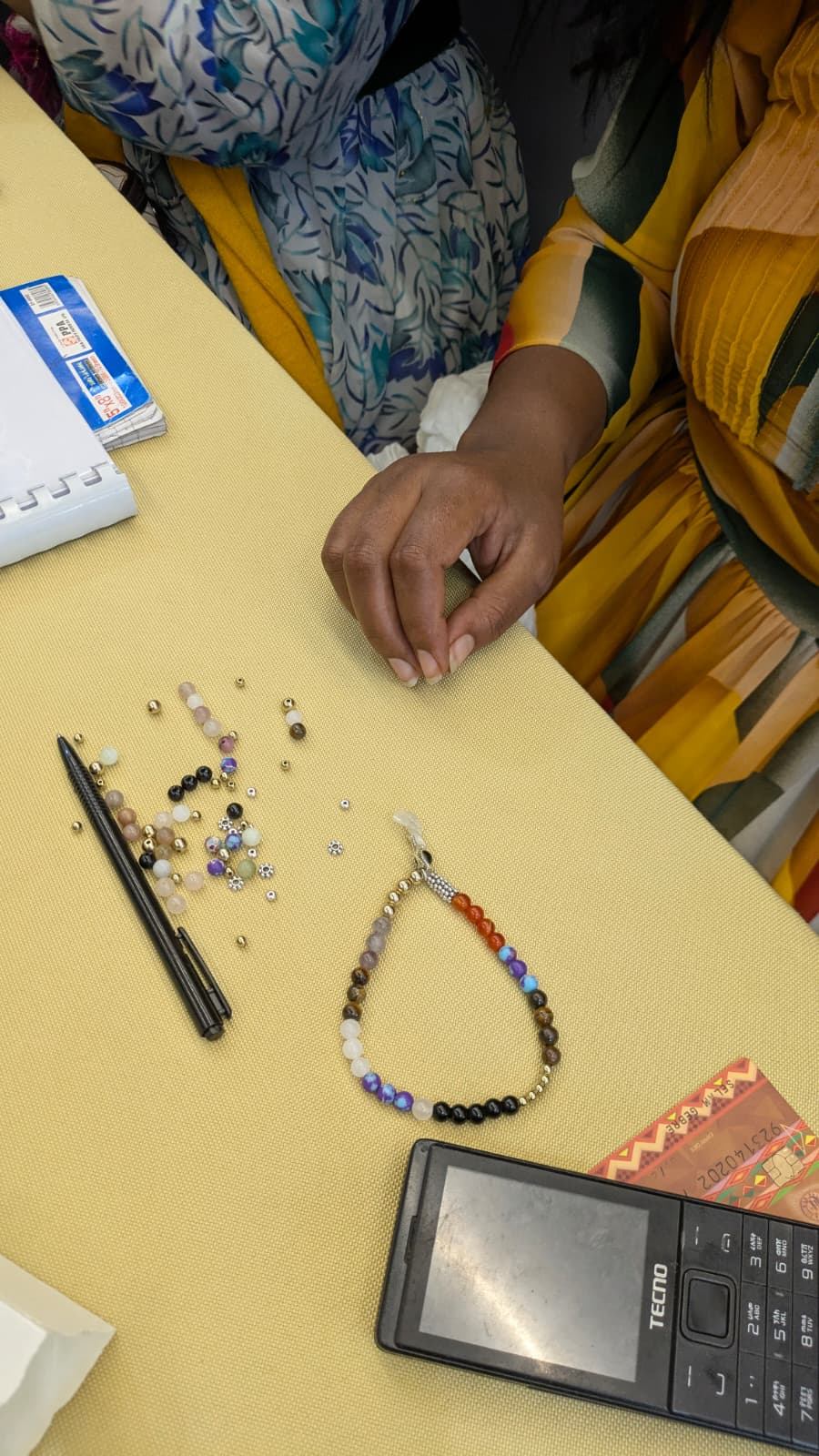
On 17 August 2026, MHPSS focal points from Ayder Comprehensive Specialized Hospital and Suhul Hospital took part in a one-day coaching session on strengthening psychosocial support for survivors of conflict-related sexual violence.
Counselling is already being provided in both hospitals, and this coaching provided an opportunity to build on this existing practice by developing a more consistent approach to mental health interventions, progress and outcomes over time. More structured processes can support continuity of care, help professionals follow changes in survivors’ needs and priorities, and make it easier to coordinate support when several professionals are involved.
To help address this, three MHPSS client files were developed: intake, follow-up, closure, progress and future case.
These forms help counsellors work more organised, track each survivor’s progress, and ensure support continues smoothly over time. Throughout the process, the survivor’s own goals and priorities stay at the centre.
The Mukwege Foundation also introduced its adapted Psychosocial Functionality Scale, a tool that measures changes in survivors’ daily functioning and wellbeing. Rather than simply counting how many counselling sessions someone has attended, it shows whether their lives are actually improving. It also gives counsellors and survivors a shared basis for talking about progress and future care.
Supporting survivor-centred care through improving medico-legal support
The Mukwege Foundation also brought together nine professionals from Ayder Comprehensive Specialized Hospital One-Stop Centre in Mekelle and Suhul Hospital/OSC in Shire for a practical training on medico-legal practice in cases of conflict-related sexual violence.
The training covered how doctors, nurses, and other health workers can combine medical care with careful record-keeping that could later support a legal case. When done well, this improves the care survivors receive and helps ensure that any evidence collected can be trusted if used in court. Through real-life examples, role-play and hands-on exercises, participants practised the key skills involved. These included writing clear, accurate medical records; tracking who handles evidence at every step so it cannot be questioned later; photographing injuries in a way that meets legal standards; protecting information stored on phones and computers; and keeping survivors’ personal information confidential.
The discussions highlighted a number of practical challenges within health facilities and other institutions that can make this work difficult in practice. For example, some facilities lack the equipment or suitable spaces they need, while record-keeping might be fragmented. Evidence is not always transferred or stored securely, and forensic photography practices can be inconsistent.
Each of these challenges has implications for the quality and traceability of evidence. Just as importantly, they can put survivors’ privacy and safety at risk and affect whether survivors feel they can trust the care they receive.
Next steps: assembling the building blocks for strengthened survivor-centred holistic care
Training alone will not be enough to solve the problems identified in the MHPSS and medico-legal As next steps, the follow-up will focus on strengthening the practical conditions for implementation through standardised tools, appropriate equipment, sufficient financial and human resources, and ongoing mentoring and expert support.
The Mukwege Foundation will support both Ayder and Suhul hospitals to put these conditions in place, so that staff can apply what they learned during the training. The aim is to help the two hospitals embed these approaches in their everyday work and to offer care that is safe, ethical, and responsive to survivors’ needs and priorities.
Taken together, these activities strengthen different parts of the support a survivor may receive: peer support in the survivor network, psychosocial care within hospital services, and medical care combined with careful documentation that could support justice.
The next phase will focus on consolidating this work, strengthening the links between these different areas, and supporting the institutional changes needed for these approaches to become part of routine practice.
Across all three areas, the common objective is for survivors of conflict-related sexual violence to receive care that is high quality, continuous and well-coordinated, and that responds to all of their needs, from their physical and mental health to their safety and access to justice.