March 31, 2026
Promoting survivor-centred justice at the 70th session of the UN Commission on the Status of Women (CSW70)
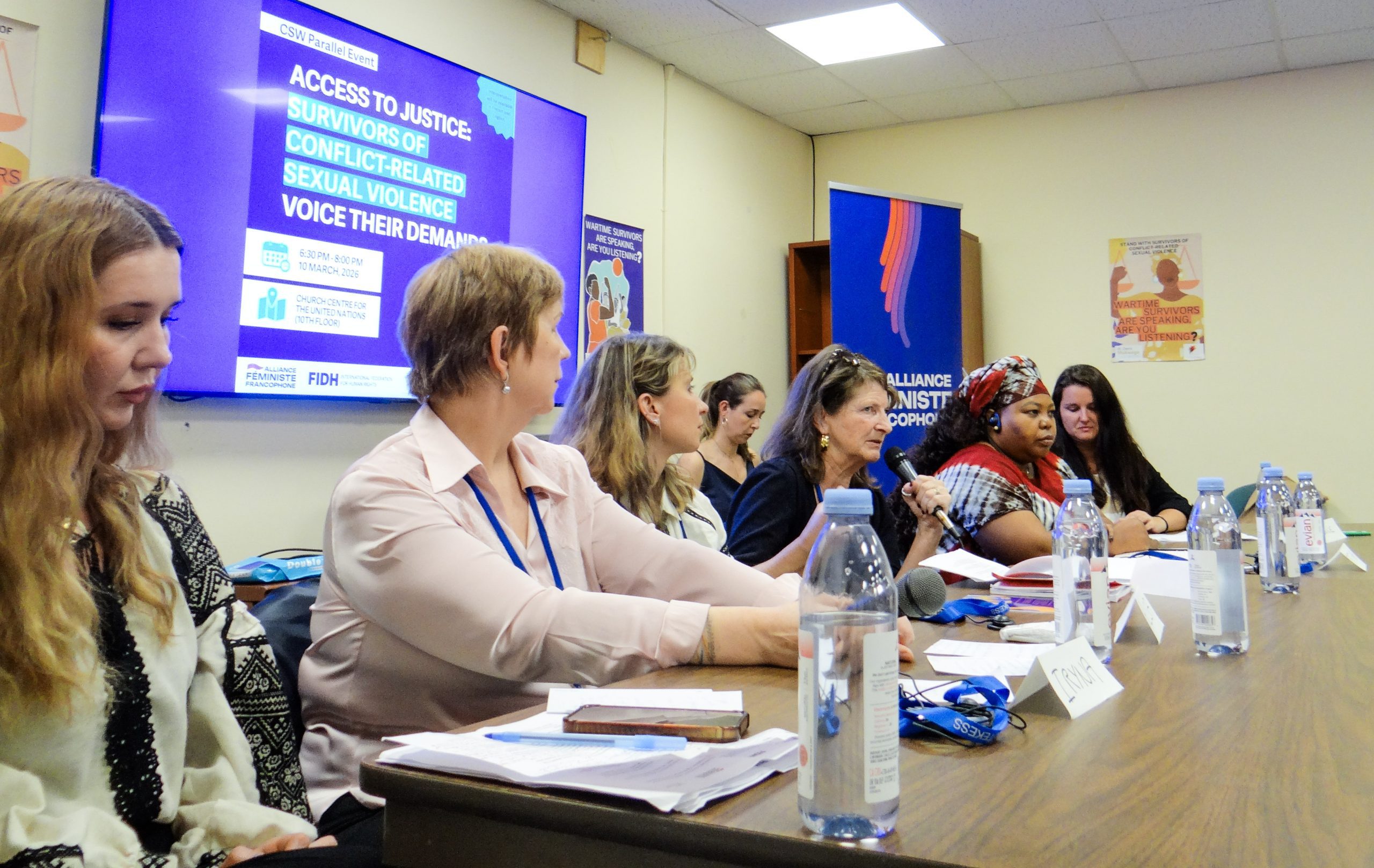
The Mukwege Foundation took part in the 70th session of the UN Commission on the Status of Women (CSW70) in New York with a delegation of survivors of conflict-related sexual violence. Held from 9 to 19 March, CSW70 brought together governments, civil society organisations, and activists to address this year’s priority theme: Access to Justice for All Women and Girls. Together with survivors and partners, we co-hosted four side events, placing survivors’ voices at the heart of the debate. In this article, we explore why these voices were more urgent than ever — and the impact they had on global discussions. Continue reading.
No justice without survivors’ voices at the centre
With conflict-related sexual violence on the rise, democratic space shrinking, and the rights of women and girls under threat, survivors’ voices were more crucial than ever at this year’s CSW session.
Yet many activists and feminists — including survivors and members of SEMA, the Global Network of Victims and Survivors to End Wartime Sexual Violence — were unable to attend. New visa rules introduced by the Trump administration, which also apply to UN meetings, prevented their participation, silencing voices central to justice and accountability.
Ten SEMA members had their visa applications refused or made conditional on financial guarantees that were not feasible. In addition, one SEMA member from Nepal was unable to travel due to flight disruptions linked to the ongoing conflict in the Middle East.
Despite these constraints, the Mukwege Foundation, with support from its partners, facilitated three SEMA members — survivors from the Democratic Republic of Congo (DRC) and Ukraine— to attend in person. By contributing their perspectives across multiple events, they ensured that discussions remained grounded in lived experience.
Defining justice through survivor perspectives
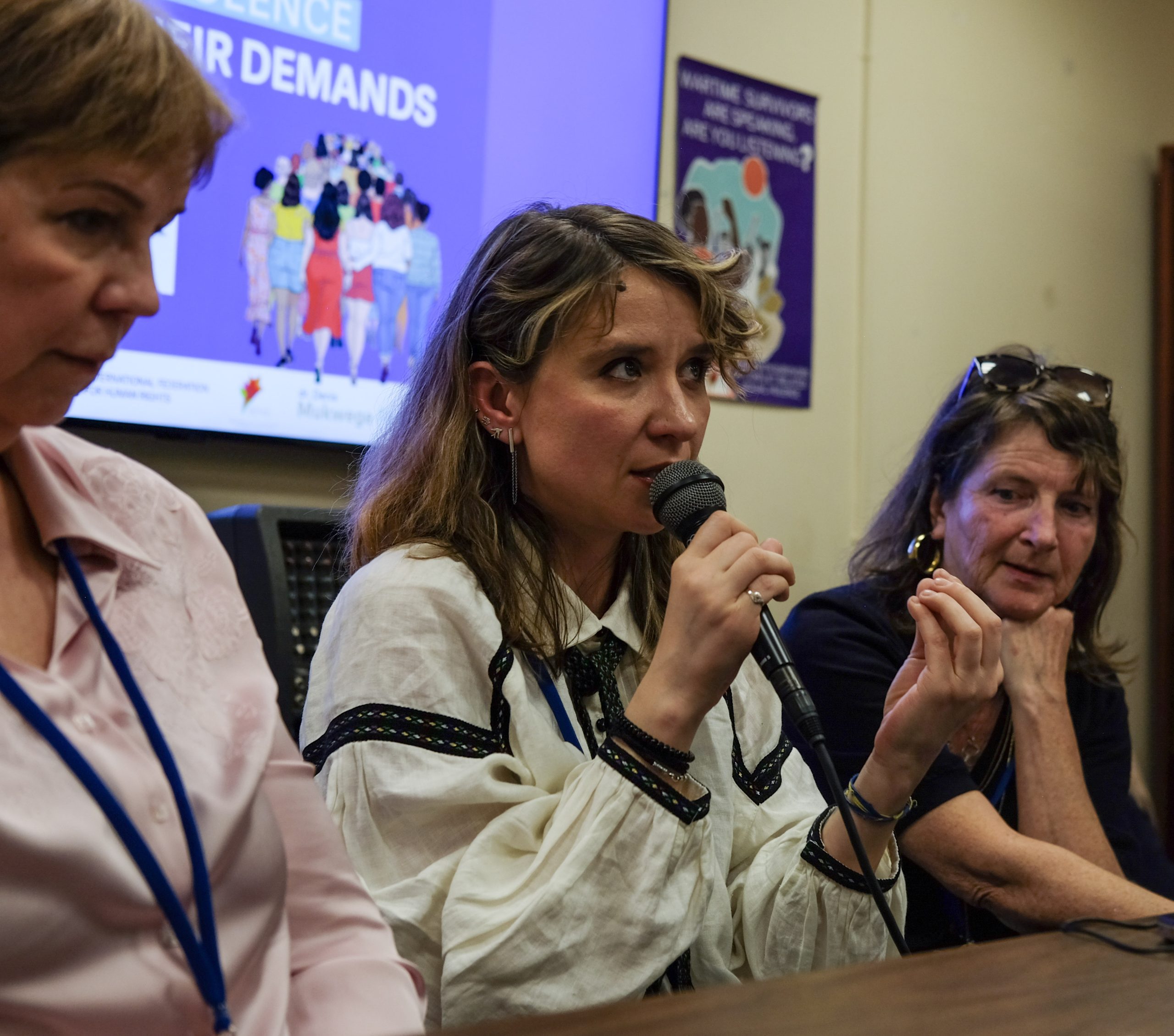
The Mukwege Foundation and SEMA members emphasised that justice for survivors of conflict-related sexual violence goes beyond legal accountability. True justice must also include recognition, access to holistic care, and reparations— and, critically, it must be defined with survivors themselves, based on their priorities.
This message was at the heart of the side event “Access to Justice: Survivors of Conflict-Related Sexual Violence Voice their Demands,” co-hosted by the Mukwege Foundation, FIDH, the Alliance Féministe Francophone, and SEMA.
A key theme that emerged during the discussion was the vital role of survivor networks. Breaking the silence is often the first step towards justice, enabling acknowledgement of the harm suffered, but this process cannot be undertaken alone. Survivors frequently face stigma, fear of reprisals, and isolation. In this context, peer-led survivor networks such as the Mouvement des Survivant.e.s de Violences Sexuelles en RDC and SEMA Ukraine provide essential spaces for support and collective advocacy, supporting survivors on their path towards healing and justice. As SEMA members Iryna Dovgan and Tatiana Mukanire emphasised, these networks are critical in creating the conditions that enable survivors to come forward and pursue justice.
“For me, justice starts by supporting survivors in breaking the silence by creating safe spaces, such as survivor-led networks.” – Tatiana Mukanire, SEMA member, Democratic Republic of Congo
Recognition also emerged as a central component of justice for survivors. For many, once they break the silence, justice begins with acknowledgement — by families, communities, states, and the international community — that the violence they experienced is a crime, and not their fault.
Collective memory initiatives, such as the SEMA Virtual Memorial, play an essential role in preserving survivors’ experiences and ensuring their stories are neither denied nor forgotten. Reflecting this mission, SEMA Ukraine member and award-winning director Alisa Kovalenko presented her documentary TRACES, which follows six Ukrainian women who survived conflict-related sexual violence and torture during Russia’s aggression.
Tatiana also presented SEMA, a film written collectively by the survivor network in the Democratic Republic of Congo and performed by survivors themselves, highlighting both the lasting impact of violence and their ongoing pursuit of justice.
The importance of collective memory was further underscored by the Thinking of You exhibition by artist Alketa Xhafa Mripa, inaugurated on International Women’s Day in front of the United Nations Headquarters.
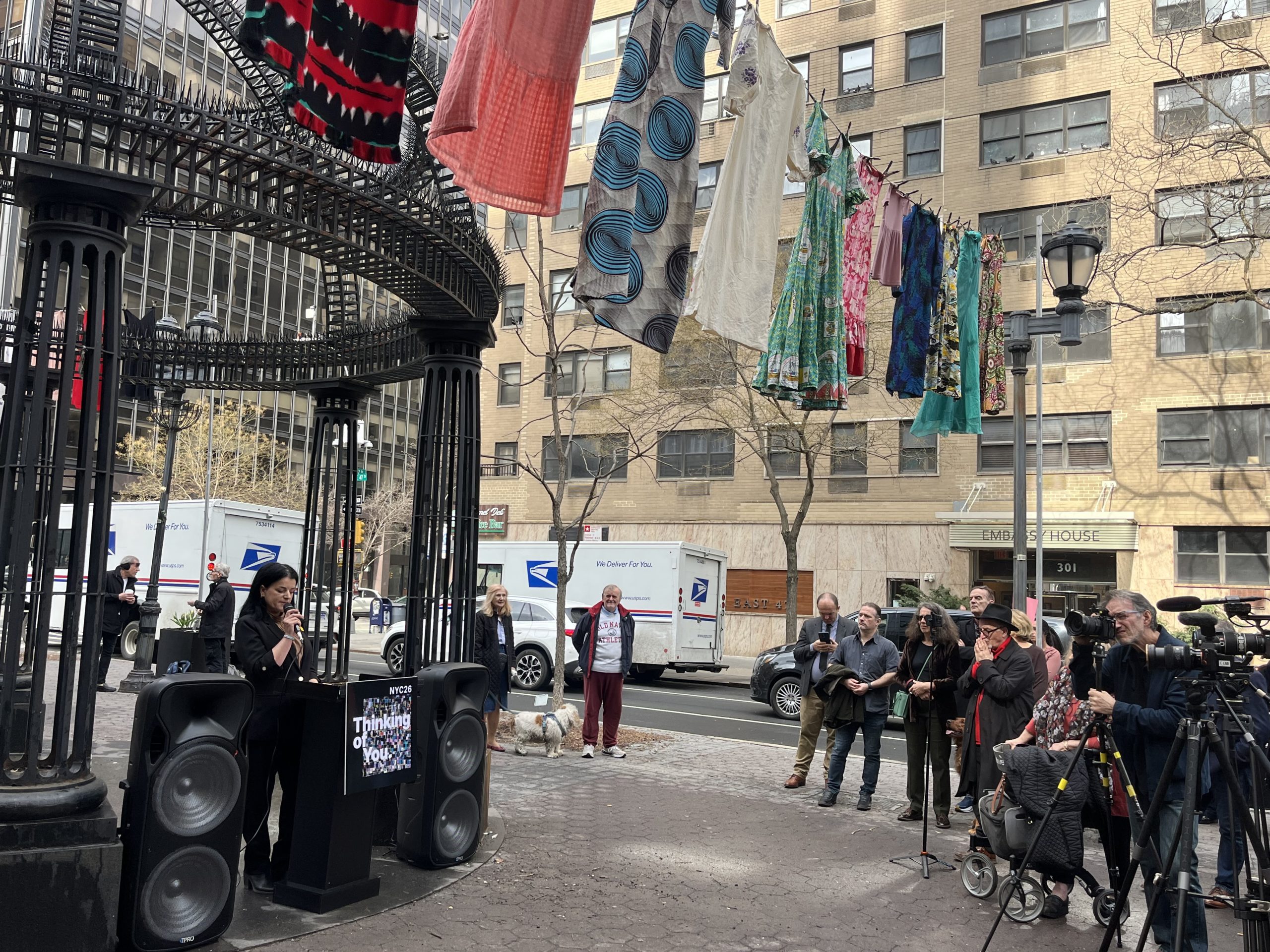
Developed in collaboration with SEMA, the installation displayed clothing belonging to survivors from across the world, making visible both the violence they have endured and the strength and dignity they continue to carry. SEMA members Tatiana (DRC) and Vasfije Krasniqi-Goodman (Kosovo) spoke at both the opening ceremony and the high-level inauguration, reinforcing the importance of visibility, recognition and survivor participation.
“What we survivors have always asked is visibility. And this exhibition does exactly that.” – Alissata M.B. Camara,Commissioner for International Affairs for the city of New York and a survivor of sexual violence
By creating space for survivors to define what justice means to them, these events highlighted how survivor networks and collective memory initiatives can represent the first steps on the path to justice. Breaking the silence enables recognition of the harm suffered, creating the conditions for survivors to begin seeking accountability.
From commitment to action: the role of survivors in ensuring meaningful justice
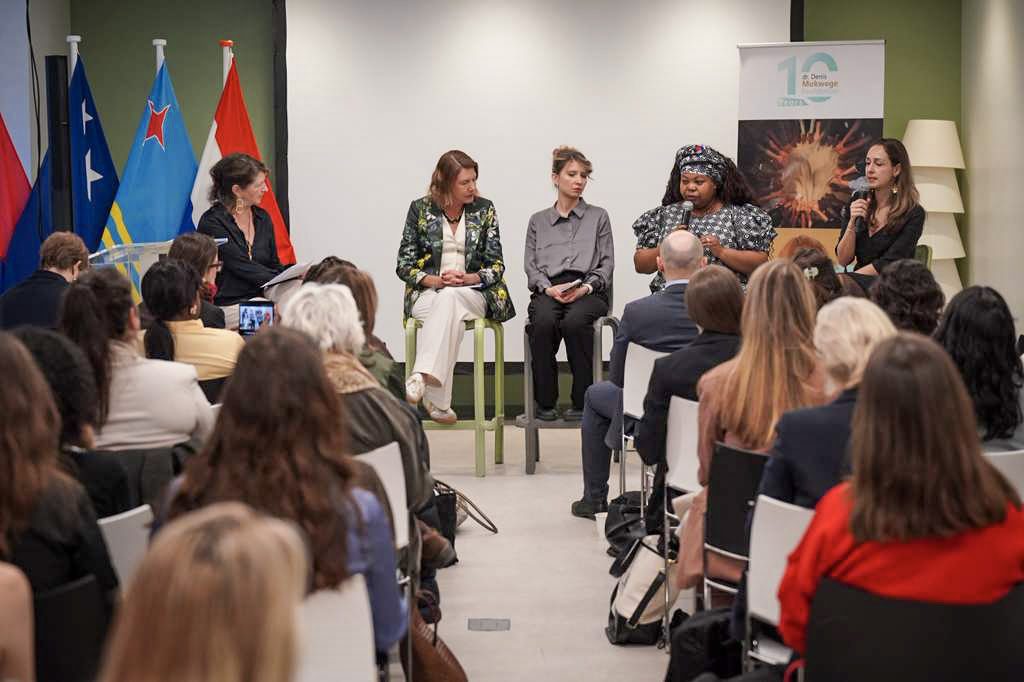
Another key message carried by the Mukwege Foundation and the SEMA delegation throughout CSW70 was the persistent gap between states’ legal obligations at the international level and their implementation at the national level. While international frameworks addressing conflict-related sexual violence have advanced considerably, these commitments too often fail to translate into tangible outcomes for survivors.
While international law is increasingly being challenged and undermined, it remains a vital framework for naming these crimes, pursuing accountability, upholding justice, and recognising survivors’ experiences. The Mukwege Foundation insists that international law matters because it enables survivors to claim their rights, seek accountability, and influence policy. Through SEMA, survivors are turning personal trauma into collective advocacy, shaping responses at the local, national, and global levels. Their leadership demonstrates that legal frameworks become meaningful when survivors themselves can use them to demand justice, challenge impunity, and drive real change.
These challenges and opportunities were addressed during the high-level side event “Justice for Survivors of Conflict-Related Sexual Violence: Advancing Implementation Through Survivor-Led Advocacy,” co-hosted by the Mukwege Foundation, SEMA, and the Permanent Missions of the Netherlands and Ukraine to the United Nations.
- Alisa Kovalenko and Tatiana Mukanire emphasised that closing the implementation gap requires the meaningful participation of survivors every stage of justice processes, ensuring that these processes respond to their needs and realities.
- Tatiana highlighted the SEMA Global Call to Action, the network’s key advocacy document outlining 13 concrete demands directed at states and the international community, grounded in international legal obligations.
- Alisa illustrated the impact of survivor engagement at the national level, drawing on the experience of Ukraine. She explained how survivors, including members of SEMA Ukraine, have played a central role in shaping the country’s justice response, engaging directly with lawmakers, contributing to the development of legislation, and advocating for its implementation.
- Antonia Mulvey, Executive Director of Legal Action Worldwide (LAW), highlighted how Rohingya survivors were permitted to testify directly before the International Court of Justice in the landmark case The Gambia v. Myanmar. Supporting survivors to participate safely and meaningfully in such processes can strengthen both the credibility and effectiveness of international justice mechanisms.
However, for many survivors around the world, legal commitments have yet to result in meaningful justice in practice.
This gap was further highlighted during the side event “From Recognition to Redress: Advancing Reparations for Survivors of Conflict-Related Sexual Violence,” co-hosted by FIDA, the Mukwege Foundation, and the Global Survivors Fund, which focused on the experience of survivors in Northern Uganda.
Although Uganda adopted a Transitional Justice Policy in 2019, progress in implementing it has been slow, and many survivors still lack access to reparations. The discussion, which included contributions from SEMA member Sylvia Acan, examined how meaningful survivor participation in policy processes can help address these gaps.
Together, these interventions demonstrated that the gap between legal commitments and implementation cannot be closed without survivors at the centre. Whether through global advocacy, national legislation, or international legal proceedings, survivor engagement is what transforms commitments on paper into meaningful justice.
Survivor-centred justice in practice: lessons from Ukraine
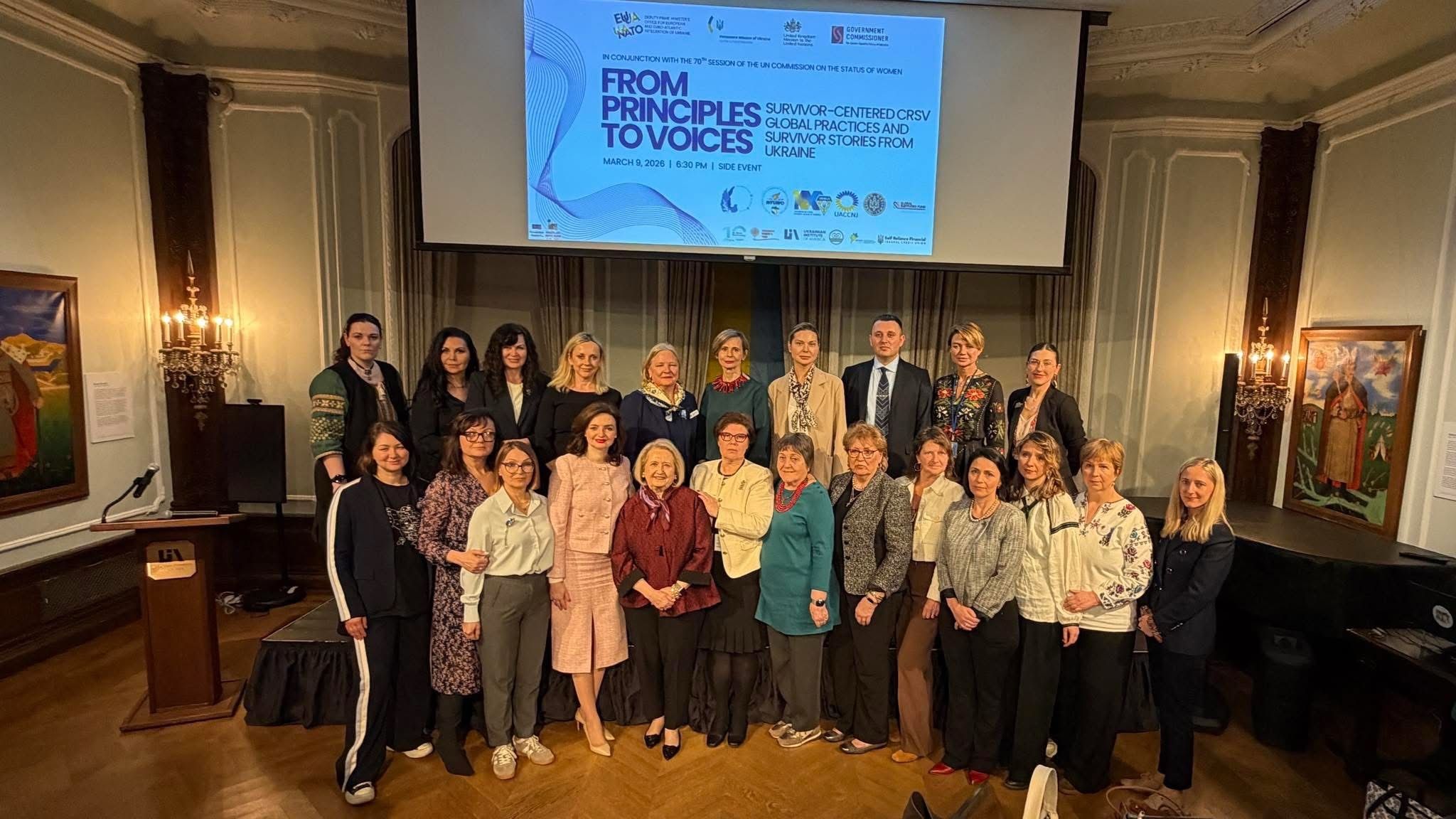
Ukraine provides a powerful example of how survivor-led advocacy can drive change. Survivors, including members of SEMA Ukraine, played a key role in shaping the Bardina Law, adopted by the Ukrainian Parliament in November 2024. This law formally recognises survivors of sexual violence from the conflict and establishes access to reparations, including psychological support, medical care, and financial assistance.
These experiences set the stage for the event “From Principles to Voices: Survivor-Centred CRSV Global Practices and Survivor Stories from Ukraine,” which highlighted key lessons learned from the Compendium of Best Practices of a Survivor-Centred Approach, developed during Ukraine’s chairmanship of the International Alliance on Preventing Sexual Violence in Conflict (PSVI). The Mukwege Foundation’s director highlighted the urgent need for survivor-centred approaches to conflict-related sexual violence. The Mukwege Foundation’s initiatives, including SEMA, the Red Line Initiative, and the Guidebook on State Obligations, support survivors in leading advocacy, demanding accountability, and shaping policy. Survivor-led activism has proven transformational, turning personal trauma into collective action that drives change locally, nationally, and internationally.
The Mukwege Foundation stressed that political will, sustained funding, and global collaboration are essential to implement existing frameworks and ensure survivors’ voices remain central in the fight against conflict-related sexual violence.
“We have the tools, we have the best practices: now, there is no reason not to do it.”Katrien Coppens, Executive Director, Mukwege Foundation
In addition to these events, the Mukwege Foundation and SEMA members participated in a range of additional discussions and panels throughout CSW70, engaging with policymakers, civil society organisations, and international partners on issues of justice and survivor-led advocacy.
As the Mukwege Foundation marks its 10th anniversary, amplifying survivor voices in international advocacy spaces remains a central priority.
Thank you
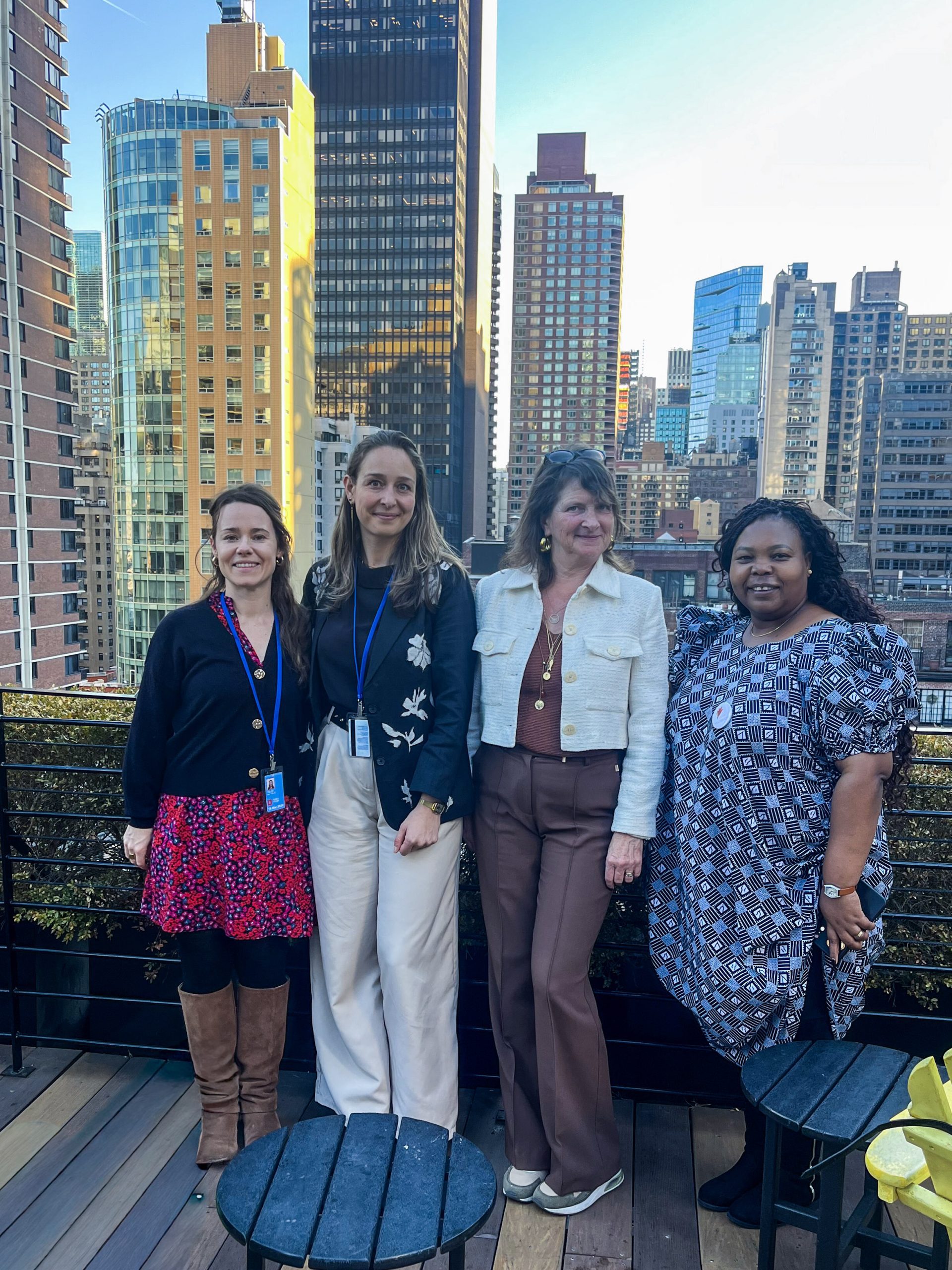
The Mukwege Foundation extends its sincere thanks to its partners and collaborators, including FIDH, the Alliance Féministe Francophone, and the Permanent Missions of the Kingdom of the Netherlands and Ukraine to the United Nations, as well as all organisations and individuals who contributed to these crucial events during CSW70.
We also thank all the SEMA members for their courage, active engagement and leadership throughout these events.