April 1, 2026
Central African Republic: interim reparative measures for survivors of conflict-related sexual violence
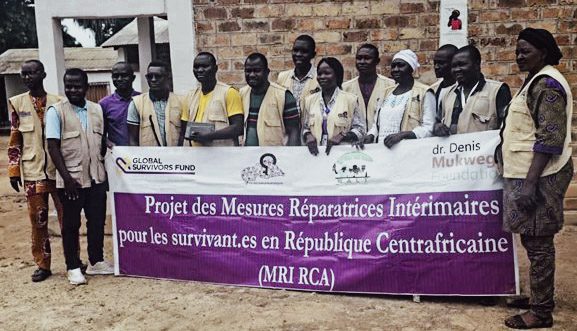
Decades of armed conflict in the Central African Republic (CAR) have been marked by brutal conflict-related sexual violence, yet survivors continue to have little to no access to reparations.
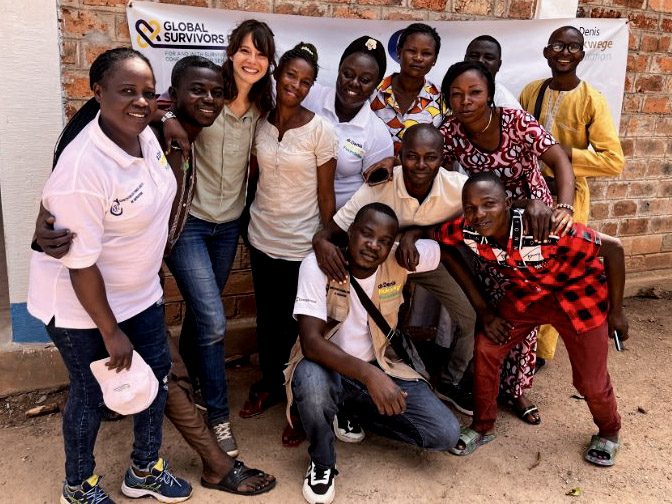
Since 2022, the Mukwege Foundation, in partnership with the Global Survivors Fund (GSF), the Ministry of Health and Population, the Comité Inter-Africain Section Centrafrique (CIAF-Centrafrique) and Women Act for Living Together (WALT), has been implementing a pilot project on interim reparative measures (IRMs) in Dékoa and surrounding areas within the Kémo health district.
The project was co-created with two survivors’ networks — the Mouvement pour les Survivant.e.s de Violences Sexuelles en Centrafrique (MOSUCA) and the Coalition Nationale des Associations de Victimes de Centrafrique (CNAV) — ensuring survivors’ priorities are at its core. It has been implemented in close collaboration with Dékoa Secondary Hospital and referral facilities in Bangui, which provide specialised care.
In this article, we share what has been achieved, how the project works and what comes next.
Interim reparative measures: survivors defining their own needs
Between 2012 and 2019, CAR experienced one of its most severe security crises, marked by sectarian fighting among armed groups.
Sexual violence — and other grave human rights violations — were used to punish and control communities. Women and girls were held for months as sexual slaves; fathers and sons were forced to rape their mothers or sisters.
Survivors of sexual violence — the vast majority of them women and girls — continue to face stigma and social exclusion, often with little or no access to comprehensive holistic care, including access to justice and reparations.
While reparations are intended to provide formal recognition and long-term redress, interim reparative measures offer more immediate support, such as medical care and financial compensation, helping to bridge the gap between urgent needs and full reparations. These measures do not replace the legal obligation of those responsible for the harm, or failed to prevent it, but provide essential support in the meantime.
As part of the pilot IRM project, the Mukwege Foundation ensured the following:
- Medical rehabilitation: addressing physical harm directly linked to conflict-related sexual violence, including gynaecological and urological conditions, and other forms of physical trauma.
- Financial compensation: direct cash transfers to each survivor, averaging €550 per person and distributed in four instalments.
- Support to survivor networks: recognising their role in co-creating and implementing the measures. Through a co-creation process and a Steering Committee, in which survivors were actively involved, survivors defined their own needs and shaped how the project responded to them.
In total, the project has reached 277 survivors of conflict-related sexual violence, providing medical reparative measures, financial compensation, and socio-economic and psychosocial support, all co-created with survivors themselves.
Medical rehabilitation: repairing physical harm linked to sexual violence
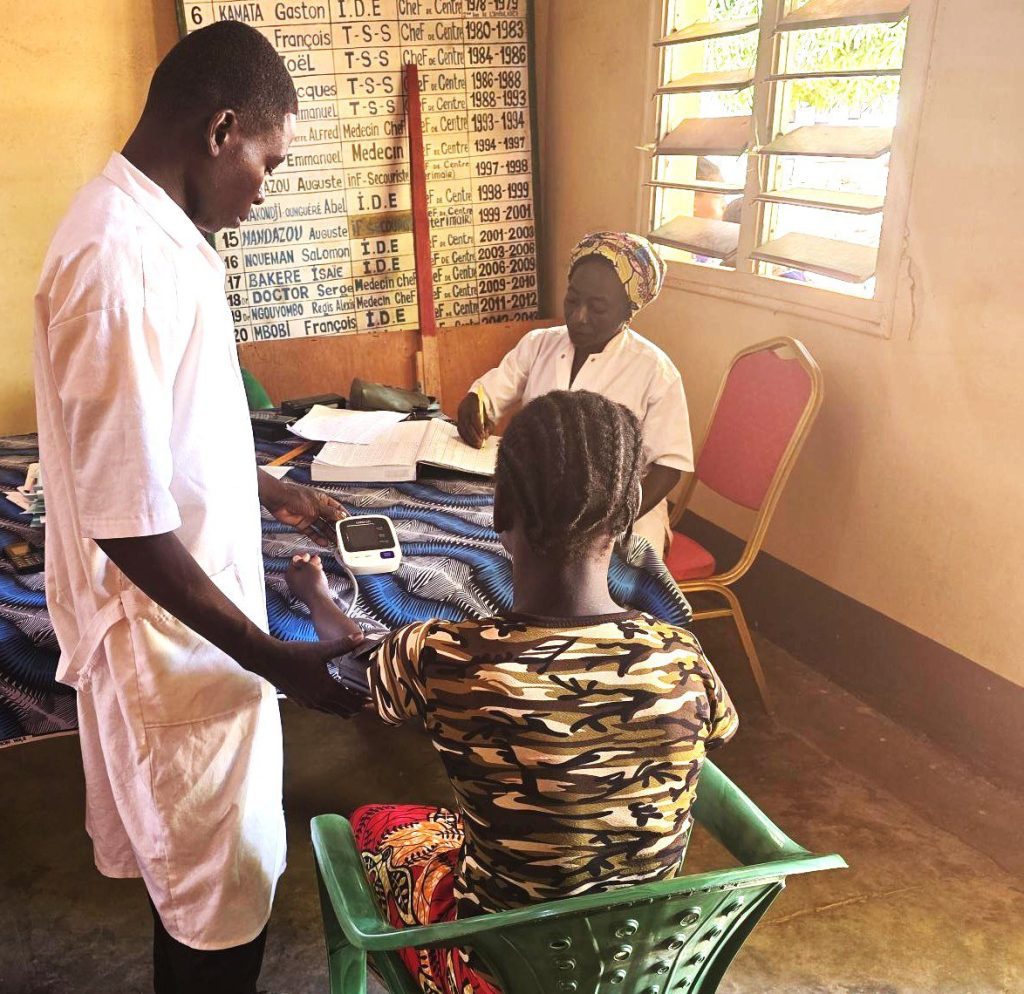
“At first I was overwhelmed with fear and filled with shame, but through the IRM, I was able to rebuild my life.” –a survivor who benefited from medical care as part of her tailored IRM package.
When the project began in 2022, the secondary hospital in Dékoa required additional support and resources to provide quality care for survivors of conflict-related sexual violence. The Mukwege Foundation rehabilitated the hospital’s internal medicine ward and sanitation facilities, supplied medical equipment and medicines, and trained 24 health care workers in trauma-informed, survivor-centred care.
In total, 277 survivors, identified as eligible for the pilot project by its Steering Committee, underwent medical screenings at the hospital before receiving medical care. Of these, 11 have received specialised care, including surgery at the Nengo mobile clinic, Dékoa Hospital or the Maman Domitien University Hospital in Bimbo.
The project’s medical approach was survivor-centred at every stage. Survivors were informed throughout the process and gave informed consent to receive care and share their information. Medical care was provided as close as possible to where survivors live, reducing the need for costly and challenging referrals to the capital city, Bangui.
Financial compensation: repairing economic harm
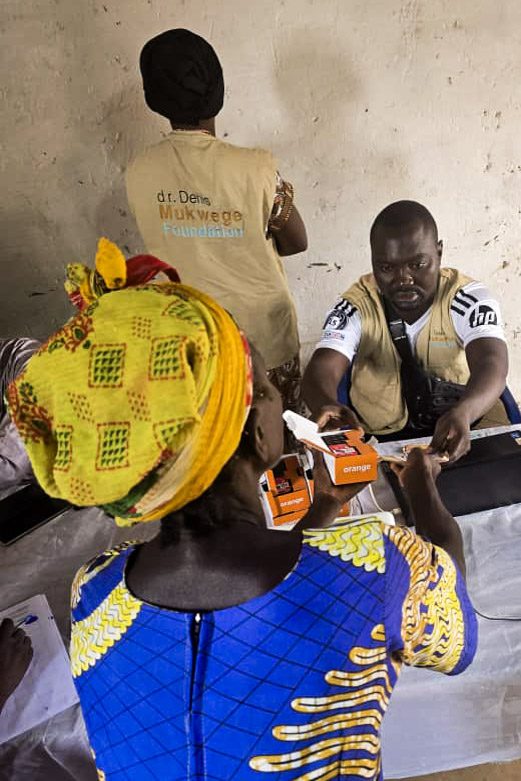
Financial reparations recognise the lasting economic impact of conflict-related sexual violence — in terms of lost livelihoods, ongoing medical costs and social exclusion. As part of this project, each of the 277 survivors received an average of €550 in financial compensation, distributed in four instalments through a combination of cash payments and mobile money transfers via Orange Money.
All 277 survivors received a mobile phone and SIM card, along with training on how to use Orange Money accounts. We established a hotline so they could report problems, ask questions or raise concerns at any point. In addition, multiple awareness-raising sessions were held before and between distributions to address potential issues in accessing funds.
This continuous support made a difference. Survivors reported high levels of satisfaction with both the compensation and its delivery. Overall satisfaction reached 96%, with the same proportion reporting that they had been treated with dignity throughout.
Taken together, these results demonstrate the importance of addressing socio-economic harm as part of a holistic approach to reparations, and of doing so in a way that is survivor-centred and dignified.
“An integrated approach to IRM is not only feasible in a fragile security context but can also be fully operational.” – Dr Papa Sambou Diakité, outgoing IRM Project Coordinator.
Looking ahead: strengthening survivor networks and national advocacy
The project concluded in February 2026 with a series of closing activities reflecting on the past 18 months. These included a presentation of the project’s results, challenges, and next steps to local, municipal, and religious authorities in the Dékoa sub-prefecture, as well as a press conference in Bangui attended by local media.
The Mukwege Foundation’s commitment to survivors in CAR does not end with the pilot project. We continue to support access to care, accompany and strengthen survivor-led networks, and work with survivors to advance their rights through advocacy.
In the months ahead, building on the evidence and lessons learned from the pilot project will be key to supporting survivor-led advocacy for reparations. Interim measures are, by definition, a bridge — they must ultimately lead to a comprehensive, state-led reparations framework.
Thank you
We thank the Global Survivors Fund (GSF) for its support and technical leadership on interim reparative measures, which made this project possible. We are also grateful to our implementing partners CIAF-Centrafrique (Comité Inter-Africain Section Centrafrique) and WALT (Women Act for Living Together), for their essential collaboration. Our sincere thanks also go to the Ministry of Health and Population of the Central African Republic and the Kémo Health District for their support.